The Volkswagen Polo is a popular small European hatchback, known for its comfortable driving feel, efficient engines and everyday practicality. But as a Polo gets older and accumulates kilometres, owners often start asking two important questions: how much will the next major service cost, and when does the timing belt need replacing?
The answer depends on the Polo’s model year, engine, transmission and service history. A routine oil and filter service is very different from a major scheduled service involving spark plugs, brake fluid or transmission maintenance. Timing belt replacement, where required, is another significant job that may not be included in a standard service quote.
The most important thing to understand is that VW Polo timing belt intervals aren’t universal. Some Polo engines use a timing belt, while others use a timing chain. Even among belt-driven engines, replacement recommendations can differ.
This guide explains what affects Volkswagen Polo servicing costs in Australia, what a major service may include, how to check your timing belt requirements and which maintenance items are worth watching as your Polo ages.
Quick Answer: VW Polo Servicing Costs & Timing Belt Intervals
- Service frequency: Many Australian VW Polo models follow a 12-month or 15,000 km servicing schedule, whichever comes first.
- Major service cost: Depends on the engine, model year and scheduled replacement items. There is no single fixed price for every Polo major service.
- Timing belt interval: Must be checked against the exact engine and manufacturer service information. Not every Polo has the same interval.
- Timing belt or chain? Different Polo engine families use different timing drive systems.
- Timing belt replacement cost: Depends on engine access, labour, the belt kit and whether related components require replacement.
- Best next step: Check the service history and confirm the vehicle’s engine-specific maintenance schedule before booking.
What’s Covered in This Guide?
- VW Polo major service costs in Australia
- What a VW Polo major service includes
- Volkswagen Polo service intervals
- VW Polo timing belt replacement intervals
- Which Polo engines use belts or chains?
- Timing belt replacement costs
- Other Polo maintenance expenses
- Frequently asked questions
How Much Does a VW Polo Major Service Cost in Australia?
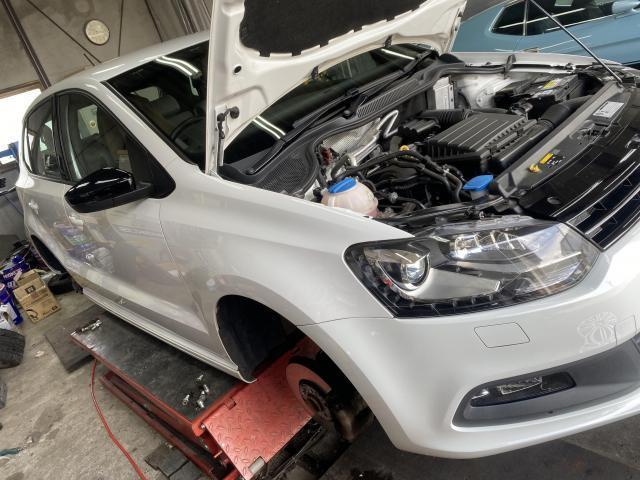
There isn’t one standard price for a Volkswagen Polo major service. The cost depends on which scheduled service is due and whether additional maintenance or repairs are required.
For example, a Polo requiring engine oil, an oil filter and routine inspections will generally cost less to service than one requiring spark plugs, brake fluid, filters and other scheduled replacement items.
The Polo’s transmission also matters. A manual gearbox, conventional automatic and dual-clutch DSG transmission may have different maintenance requirements.
| Service Type | Typical Work Involved | Cost Considerations |
|---|---|---|
| Routine oil service | Engine oil, oil filter and applicable checks | Usually less involved than a major service |
| Scheduled logbook service | Manufacturer-specified inspections and replacement items | Varies by kilometre and time interval |
| Major service | More extensive scheduled maintenance, potentially including filters, spark plugs or brake fluid | Depends on the exact service schedule |
| DSG transmission service | Transmission-specific maintenance where prescribed | May be an additional scheduled expense |
| Timing belt replacement | Timing belt kit and related components as required | Usually a separate, labour-intensive maintenance job |
| Additional repairs | Brakes, cooling system, suspension or other worn components | Quoted according to inspection findings |
When comparing Volkswagen Polo service quotes, check exactly what’s included. A low advertised price may cover only basic servicing, while a more comprehensive quote may include additional manufacturer-scheduled maintenance.
What About Volkswagen Australia’s Prepaid Service Plans?
Volkswagen Australia offers Care Plans for eligible vehicles, covering specified scheduled services. These plans can be useful as a manufacturer reference, but their prices should not be confused with the cost of an individual major service or an independent workshop quote.
Plan prices and eligibility vary by model year and can change. Check Volkswagen Australia’s current Care Plan pricing if you’re comparing dealership servicing options.
What Does a VW Polo Major Service Include?
The term “major service” is commonly used by workshops and vehicle owners, but it doesn’t always refer to one fixed Volkswagen service package.
Volkswagen’s maintenance requirements are based on the vehicle’s age, distance travelled, engine, transmission and equipment. Some items are due at particular kilometre intervals, while others are time-based.
Engine Oil and Filter
Correct engine oil is especially important for Volkswagen’s turbocharged petrol engines. The oil must meet the specification required for the particular engine, not simply a generic viscosity recommendation.
Spark Plugs
Spark plugs are scheduled replacement items on petrol Polo engines. Their interval varies by engine and specification.
Worn plugs can contribute to poor running, misfires or reduced performance, although those symptoms can also have other causes.
Air and Cabin Filters
The engine air filter helps protect the engine from airborne contamination, while the cabin filter helps maintain airflow and air quality through the heating and air conditioning system.
Replacement intervals depend on the service schedule and operating conditions.
Brake Inspection and Brake Fluid
A scheduled service should include the applicable checks of brake pad and rotor condition, hydraulic components and other safety-related items.
Brake fluid is also a time-based maintenance item. The correct replacement schedule should be checked against the Polo’s manufacturer requirements.
Steering, Suspension and Tyres
Suspension bushes, steering joints, tyre condition and uneven wear are worth inspecting as the vehicle ages. Finding worn components early may help prevent additional tyre wear and handling problems.
Diagnostic and Electronic System Checks
Modern Volkswagen Polos contain numerous electronic systems. Where appropriate, diagnostic checks can help identify stored faults relating to engine management, transmission operation and other vehicle functions.
VW Polo Service Intervals: 15,000 km, 30,000 km, 60,000 km and Beyond
Many Australian-market Volkswagen Polo models use scheduled servicing every 15,000 kilometres or 12 months, whichever comes first.
However, the exact work due at each service varies by vehicle. The following table is a general guide to how scheduled servicing progresses, not a substitute for the manufacturer’s service checklist.
| Service Milestone | What to Check |
|---|---|
| 15,000 km / 12 months | Routine scheduled service, including applicable oil service and inspections |
| 30,000 km / 24 months | Scheduled service plus any time- or distance-based additional items |
| 45,000 km / 36 months | Scheduled service and condition checks |
| 60,000 km / 48 months | Scheduled service; check whether additional filters, spark plugs or transmission work are due |
| 75,000 km / 60 months | Scheduled maintenance and assessment of age-related wear |
| 90,000 km / 72 months | Scheduled service; review timing drive history and other engine-specific requirements |
| 120,000 km and beyond | Continue scheduled servicing and confirm major replacement items against the exact engine and service history |
A vehicle that travels only a few thousand kilometres per year still needs time-based servicing. Equally, a Polo covering high annual kilometres may reach its next service before 12 months have passed.
VW Polo Timing Belt Replacement Intervals: When Is It Due?
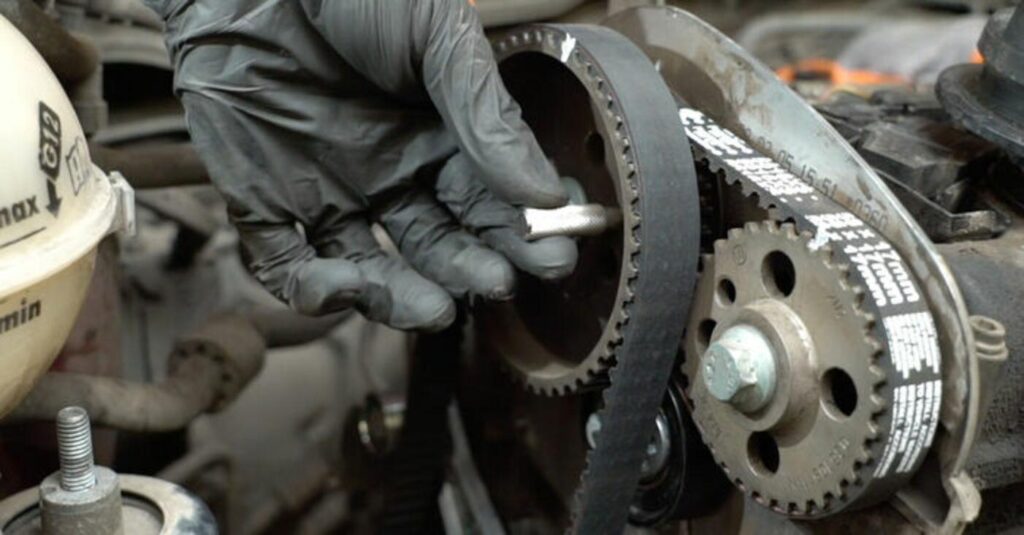
The timing belt is one of the most important maintenance considerations for Volkswagen Polo engines that use a belt-driven camshaft system.
Its job is to keep the crankshaft and camshaft movement correctly synchronised. If the belt fails or loses timing, serious internal engine damage may occur, depending on the engine design and circumstances.
Unfortunately, there is no single timing belt replacement interval that applies to every VW Polo.
Why Timing Belt Intervals Differ Between Polo Models
Volkswagen has used several different petrol and diesel engines across Polo generations. These engines don’t all share the same timing drive arrangement, belt materials, inspection requirements or replacement recommendations.
Some older Polo engines have different belt service requirements from newer TSI engines. Certain engines use a timing chain instead of a belt.
Before booking a timing belt replacement, confirm the vehicle’s year, engine code and relevant Volkswagen service schedule. The engine code is more reliable than identifying the car only as a “Polo 1.2” or “Polo 1.4”.
Is There a 100,000 km or 120,000 km VW Polo Timing Belt Rule?
No universal rule should be applied across the entire Polo range. Although replacement figures such as 100,000 km or 120,000 km are frequently mentioned online, they may not match the service requirements of your particular engine.
Some manufacturer recommendations also consider belt age and operating conditions, not just distance travelled.
If your Polo’s timing belt history is unknown, especially on an older used vehicle, arrange an engine-specific maintenance assessment rather than assuming the belt is safe because the odometer is below a commonly quoted figure.
Can You Tell Whether a Timing Belt Needs Replacing by Looking at It?
A visual inspection may identify obvious deterioration, contamination or damage, but it cannot reliably establish the remaining service life of every timing belt.
Belts can deteriorate or develop faults that aren’t obvious from a quick external check. Documented replacement history and the correct manufacturer schedule remain important.
Does the VW Polo Have a Timing Belt or Timing Chain?
Both systems have been used across different generations and engine families of the Volkswagen Polo.
| Polo Engine Family | Timing Drive Consideration |
|---|---|
| Older Polo petrol engines | May use a timing belt or chain depending on engine code and generation |
| Some earlier 1.2 TSI engines | Timing chain arrangements were used in certain engine generations |
| Later 1.2 TSI engine generations | Some use timing belts rather than the earlier chain arrangement |
| 1.0 TSI engines | Commonly use a belt-driven timing system, with engine-specific servicing requirements |
| Polo GTI engines | Timing drive type varies by engine generation; confirm by engine code |
| Diesel Polo engines | Requirements vary by engine family and model year |
This is why searching for a timing belt interval using only the Polo model name can produce conflicting answers. Two Polos with similar badges may have different engines and different maintenance needs.
What About VW Polo Timing Chain Problems?
A timing chain doesn’t usually have the same routine replacement schedule as a conventional timing belt. However, chains, tensioners and associated components can still develop wear or faults.
Unusual rattling during startup, engine timing-related fault codes or poor running may justify further investigation, although these symptoms can also have other causes.
Any suspected timing chain issue should be diagnosed promptly, particularly if engine operation has changed.
How Much Does VW Polo Timing Belt Replacement Cost?
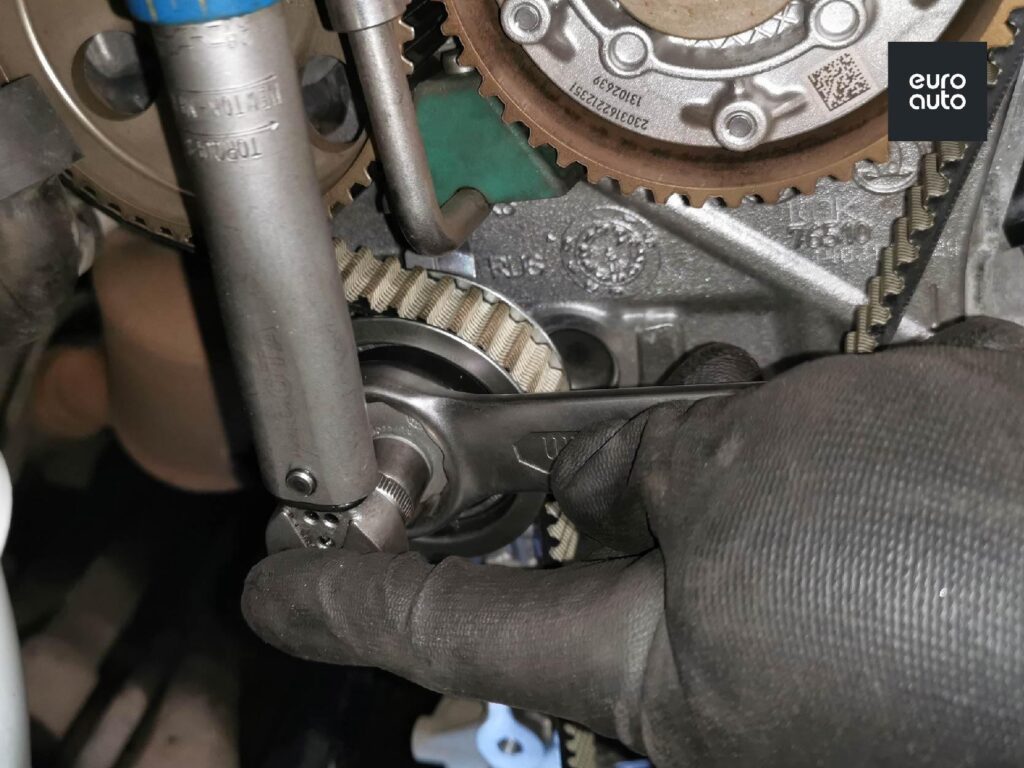
Timing belt replacement is usually more involved than a routine service because the technician needs access to the engine’s timing drive and must ensure the crankshaft and camshaft remain correctly synchronised.
The cost varies according to the engine, parts required and labour involved. A reliable quote should be based on the exact vehicle rather than a generic Polo timing belt price.
What Is Normally Included in a Timing Belt Replacement?
- Replacement timing belt suitable for the engine
- Relevant tensioners and idler pulleys, where required
- Manufacturer-specified single-use bolts or other hardware
- Associated seals or components where inspection shows they require attention
- Water pump replacement where recommended or appropriate for the engine design
- Coolant replacement if the cooling system is opened
- Correct timing setup and post-repair checks
Not every timing belt quote includes the same components. Ask whether the price covers the complete recommended kit, associated hardware and any water pump work.
Should You Replace the Water Pump at the Same Time?
On engines where the water pump is driven by the timing belt, replacing the pump during timing belt work may be recommended to reduce the likelihood of repeating substantial labour later.
However, not every VW Polo uses the same water pump arrangement. The decision should be based on the engine design, pump condition and applicable manufacturer guidance.
What Happens If the Timing Belt Breaks?
A timing belt failure can stop the engine immediately. On interference engine designs, loss of valve timing can allow internal components to collide, potentially causing serious engine damage.
Repair costs following a major timing failure can be far greater than the cost of preventative belt replacement.
If you suspect a timing belt has failed, do not repeatedly attempt to restart the engine. Arrange professional assessment.
Other VW Polo Maintenance Costs to Watch as the Car Ages
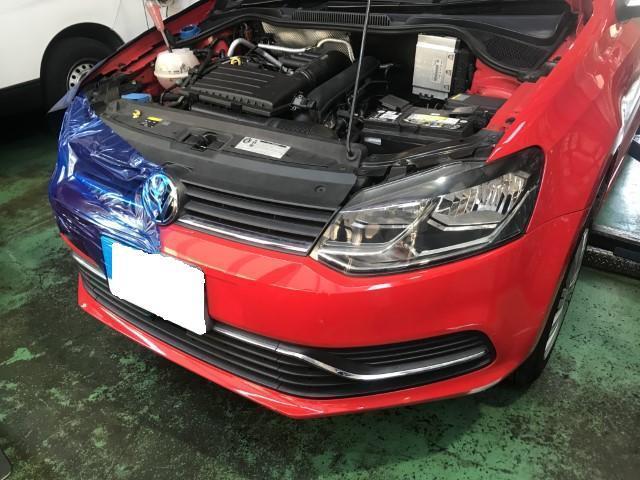
Timing belt replacement isn’t the only expense to consider when budgeting for long-term Polo ownership. As with any vehicle, wear-related maintenance becomes increasingly relevant with age and mileage.
DSG Transmission Servicing and Fault Diagnosis
Some Volkswagen Polo models use a dual-clutch DSG transmission. The servicing requirements vary by gearbox design, so it’s important not to assume every DSG needs the same fluid-change interval.
If the vehicle develops unusual shifting, shuddering or transmission warnings, the cause should be diagnosed before recommending repairs.
Cooling System and Water Pump Issues
Cooling system components such as water pumps, thermostats, hoses and seals can deteriorate with age.
Coolant leaks, rising engine temperature or repeated coolant loss should be investigated promptly. Overheating can cause significant engine damage.
Ignition Coils and Spark Plugs
On petrol Polo models, worn spark plugs or faulty ignition coils can contribute to rough running, hesitation or engine misfires.
These symptoms aren’t unique to ignition components, so diagnosis is preferable to replacing parts by guesswork.
Brake Pads, Rotors and Brake Fluid
Brake pad and rotor wear depends on driving conditions and component condition. Brake fluid replacement is a separate time-based maintenance requirement.
Keeping up with brake inspections can help identify wear before it causes additional damage or affects braking performance.
Suspension Bushes and Steering Components
As a Polo ages, worn suspension bushes, steering joints or shock absorbers can affect ride comfort, handling and tyre wear.
Knocking noises, uneven tyres or changes in steering feel are worth checking during routine servicing.
Is a VW Polo Expensive to Maintain?
A well-maintained Volkswagen Polo can be a practical choice for drivers who want a compact European car. However, servicing costs depend on the engine, transmission, age and maintenance history.
Routine servicing is generally more predictable than major repairs. Costs can rise when scheduled maintenance has been delayed, a timing belt replacement is overdue or multiple age-related items need attention at the same time.
For used Polo owners, having a clear picture of upcoming maintenance is often more useful than focusing only on the price of the next oil change.
Dealer vs Independent VW Polo Servicing: What’s the Difference?
Volkswagen dealerships offer manufacturer servicing and may have prepaid service plans available for eligible vehicles. An independent European car specialist can also provide servicing and repairs using appropriate equipment, parts and manufacturer specifications.
When comparing workshops, consider whether the quote includes the correct scheduled maintenance items, suitable engine oil, quality replacement parts and any necessary diagnostic work.
For timing belt work in particular, experience with the exact engine and the correct timing tools and procedures are important.
Buying a Used VW Polo? Check These Maintenance Records First
If you’re considering a used Volkswagen Polo, service history can reveal more than the odometer reading alone.
- Regular servicing: Look for evidence of services completed at the required time or kilometre intervals.
- Timing belt history: Confirm whether the engine has a belt and, if so, whether replacement is due or documented.
- Transmission maintenance: Check for any gearbox-specific servicing requirements and relevant records.
- Cooling system: Look for evidence of coolant leaks, overheating or previous repairs.
- Brake maintenance: Review brake pad, rotor and fluid replacement history.
- Warning lights: Investigate engine or transmission warnings rather than accepting explanations without diagnosis.
- Independent inspection: Consider a pre-purchase inspection to identify existing faults and upcoming maintenance.
A Polo with documented maintenance and no significant outstanding work may represent better value than a cheaper example with uncertain service history.
Common VW Polo Servicing Mistakes to Avoid
- Assuming every Polo uses the same timing belt interval: Requirements vary by engine.
- Confusing timing belts and timing chains: The maintenance approach is different.
- Choosing a major service based only on price: Check which scheduled items are included.
- Ignoring time-based maintenance: Low annual kilometres don’t eliminate service requirements.
- Overlooking transmission specifications: Different DSG and automatic gearboxes may require different servicing procedures.
- Delaying cooling system repairs: Overheating can lead to expensive engine damage.
- Buying a used Polo without checking service history: Outstanding maintenance can significantly affect ownership costs.
Frequently Asked Questions About VW Polo Servicing & Timing Belts
How much does a VW Polo major service cost in Australia?
The cost depends on the Polo’s engine, model year, transmission and the maintenance items due. A major service involving spark plugs, filters or additional scheduled work will generally cost more than a routine oil service. Request a quote based on the vehicle’s exact details.
How often should a Volkswagen Polo be serviced?
Many Australian VW Polo models use a 15,000 km or 12-month scheduled service interval, whichever comes first. Check the manufacturer’s schedule for your particular vehicle.
When should a VW Polo timing belt be replaced?
Timing belt replacement requirements vary by engine and model year. There is no single interval suitable for every Polo. Confirm the correct schedule using the vehicle’s engine code and service information.
Does a VW Polo have a timing belt or timing chain?
Both have been used in different Polo engines. The timing drive type depends on the engine family and generation, so it should be identified before planning maintenance.
Does the VW Polo 1.0 TSI have a timing belt?
Many Polo 1.0 TSI engines use a timing belt. The correct inspection and replacement requirements should be confirmed for the specific engine code and model year.
Should the water pump be changed with the timing belt?
Water pump replacement may be recommended when the pump is driven by the timing belt or when its condition and engine design justify replacement during the same repair. The correct approach varies by engine.
Is timing belt replacement included in a VW Polo major service?
Not automatically. Timing belt replacement is often quoted separately because it involves additional parts and labour. Always confirm whether it is included in the service price.
What happens if a VW Polo timing belt breaks?
A timing belt failure can stop the engine and may cause serious internal damage, depending on the engine design. If a failure is suspected, avoid restarting the engine and arrange professional assessment.
Can an independent mechanic service a VW Polo?
Yes. A suitably equipped independent workshop can perform Volkswagen Polo logbook servicing, diagnostics and repairs using the correct manufacturer specifications and appropriate replacement parts.
VW Polo Servicing & Timing Belt Replacement | Windsor & Grange, Brisbane
Whether your Volkswagen Polo is due for its next scheduled service, approaching a major maintenance milestone or has an uncertain timing belt history, getting the right advice early can help avoid unexpected repair costs.
At Memmotts Automotive, we provide Volkswagen servicing, maintenance, diagnostics and repairs from our Windsor and Grange workshops in Brisbane’s northside.
Our team can review your Polo’s service history, identify the maintenance requirements for its engine and help you understand which items are due now and which may be approaching.
Why Choose Memmotts Automotive?
Family-owned since 1956, Memmotts Automotive offers experienced technicians, professional diagnostic equipment, quality replacement parts and straightforward servicing advice.
With workshops in Windsor and Grange, we assist Volkswagen owners across Brisbane’s northside, including Lutwyche, Wilston, Stafford, Albion, Newmarket, Gordon Park and surrounding suburbs.
Need a VW Polo major service or timing belt assessment in Brisbane? Contact Memmotts Automotive with your Polo’s model year, engine details and current kilometres to discuss its servicing requirements and arrange an inspection.
Book online now, in under a minute!
Prefer to book by phone? Windsor (07) 3357 4955 · Grange (07) 3172 5490 — Mon–Fri 8:00am–5:00pm.