European cars are known for confident braking, precise handling and reassuring control. Whether you’re driving a BMW 3 Series, Audi Q5, Mercedes-Benz C-Class or Volkswagen Golf GTI, your braking system plays a major role in how the vehicle feels and performs.
But when do European brake rotors actually need replacing? Should brake pads and discs always be changed together? And what does it mean when a brake wear sensor warning appears on your dashboard?
The short answer is that brake replacement should be based on measured wear, component condition and manufacturer specifications—not kilometres alone. Brake fluid is different: it also has a time-based replacement requirement, even when the brakes appear to be working normally.
In this guide, we’ll explain the warning signs of worn brakes, how brake sensors work, when brake fluid needs changing and what European vehicle owners should know before booking a brake service or repair.
Quick Answer: When Should European Brakes Be Replaced?
- Brake pads: Replace when friction material reaches the vehicle or brake manufacturer’s wear limit, or when damage or another fault requires replacement.
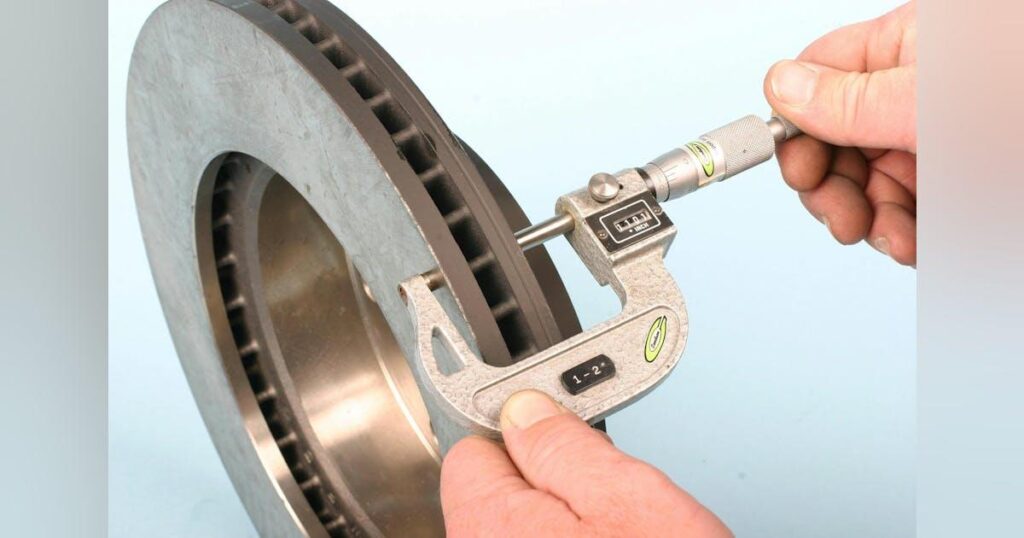
- Brake rotors: Replace when they reach minimum thickness or show unacceptable cracking, scoring, damage or other measured defects.
- Brake wear sensors: Inspect when a warning appears and replace the sensor when it has been activated, damaged or cannot be reused under the manufacturer’s procedure.
- Brake fluid: Many European vehicles require replacement approximately every two years, but the correct interval depends on the model and manufacturer.
- Brake warning lights: Have them investigated promptly. Not every warning means the same thing.
What’s Covered in This Guide?
- Signs your European car needs brake attention
- When brake rotors need replacing
- Brake pad replacement and expected lifespan
- Brake wear sensors and dashboard warnings
- Brake fluid replacement intervals
- BMW, Audi, Mercedes and Volkswagen brakes
- What affects European brake repair costs?
- Frequently asked questions
7 Warning Signs Your European Car Brakes Need Attention
Brake problems can develop gradually. Sometimes the first indication is a squeal or vibration. In other cases, the vehicle displays a warning before the driver notices any change in braking performance.
| Warning Sign | Possible Causes |
|---|---|
| Squealing when braking | Brake pad wear indicator, pad vibration or other brake component issues |
| Grinding noise | Severely worn pads, damaged rotor surfaces or trapped debris |
| Steering wheel vibration under braking | Brake disc thickness variation, runout or other wheel and suspension problems |
| Brake pad warning on dashboard | Activated wear sensor, damaged sensor wiring or monitoring fault |
| Soft or spongy brake pedal | Air in the hydraulic system, fluid leaks or other hydraulic faults |
| Vehicle pulls when braking | Caliper problems, uneven braking force, tyres or suspension issues |
| Burning smell or unusually hot wheel | Dragging brakes, sticking caliper or overheating components |
These symptoms should not be ignored. A worn brake pad may be relatively straightforward to replace, but continuing to drive until it damages the rotor can increase repair costs.
Safety note: If braking performance is significantly reduced, the pedal sinks unexpectedly, brake fluid is leaking or a serious brake-system warning appears, stop safely and arrange professional assistance. Do not continue driving a vehicle with compromised brakes.
When Should European Brake Rotors Be Replaced?
Brake rotors, also called brake discs, provide the friction surface that the brake pads clamp against to slow the vehicle. Every time you brake, a small amount of wear can occur.
On European vehicles, particularly heavier luxury SUVs and performance-oriented models, rotors may be subjected to substantial braking loads. Their condition matters for both stopping performance and heat management.
1. The Rotor Has Reached Minimum Thickness
Every brake rotor has a specified minimum allowable thickness. This is often marked on the disc itself and is also available through the relevant manufacturer specifications.
A technician measures rotor thickness using an appropriate measuring tool and compares the result with the minimum specification. If the disc is at or below its wear limit, replacement is required.
Important: A rotor can look relatively smooth and still be too thin to remain in service. Visual inspection alone isn’t enough to confirm its condition.
2. The Rotor Is Cracked, Deeply Scored or Damaged
Brake rotors may also need replacement when their braking surfaces develop significant cracks, deep grooves, heat damage or other defects that make them unsuitable for continued use.
Some performance brake discs are drilled or slotted by design. These features should not be confused with actual cracking or damage, which requires proper inspection.
3. The Brakes Shudder or Vibrate
If your steering wheel shakes or the brake pedal pulses during braking, uneven rotor thickness or excessive disc runout may be contributing to the problem.
However, brake vibration doesn’t automatically mean the rotors are warped. Hub condition, wheel bearings, suspension components and incorrect installation can produce or contribute to similar symptoms.
Measurements help establish whether the brake discs are responsible before replacement is recommended.
Do Brake Rotors Need Replacing Every Time You Change Pads?
Not necessarily. If the rotors remain within specification and are in suitable condition, they may be serviceable for another set of pads. The correct decision depends on remaining thickness, surface condition, manufacturer requirements and the expected wear over the next service interval.
Brake rotors are generally replaced in pairs on the same axle to maintain consistent braking characteristics.
Can European Brake Rotors Be Machined Instead of Replaced?
In some cases, machining may be appropriate if the rotor is suitable for the procedure and will remain safely above its minimum thickness afterwards.
However, machining is not suitable for every rotor or brake design. The technician must consider the manufacturer’s requirements, disc construction and the amount of material that would need to be removed.
At Memmotts Automotive, rotor machining may be considered where appropriate, while rotors that are below their safe limits require replacement.
How Long Do European Brake Pads Last?
Brake pad lifespan varies considerably. Driving style, vehicle weight, traffic conditions, braking habits and pad material all influence how quickly friction material wears.
As a broad guide, brake pads may last anywhere from approximately 25,000 to 70,000 kilometres, although some vehicles will fall outside that range. Performance driving, heavy urban use and towing can shorten their lifespan.
The most reliable way to know when your brake pads need replacing is to have their remaining friction material measured during servicing.
Why Do Some European Cars Wear Through Brakes Faster?
Many European vehicles use braking systems designed to deliver strong, consistent performance. Larger rotors, multi-piston calipers and specific pad compounds may be fitted depending on the model.
Factors that can increase brake wear include:
- Frequent stop-start driving
- Heavier SUVs and high-performance vehicles
- Repeated hard braking
- Driving in hilly areas
- Calipers that aren’t releasing properly
- Uneven pad wear caused by mechanical faults
Replacing pads before they become excessively worn can help prevent damage to the rotor surfaces and other brake components.
European Brake Wear Sensors: What Does the Dashboard Warning Mean?
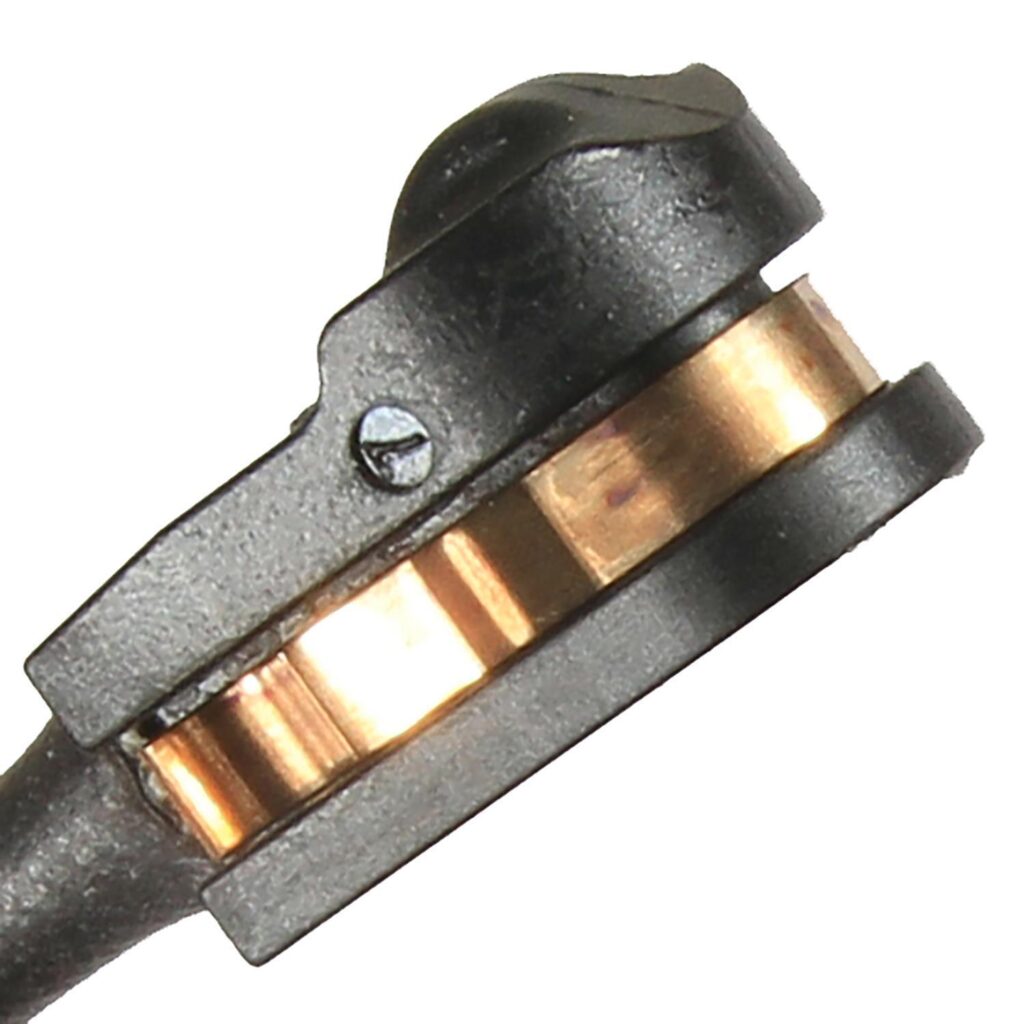
Many BMW, Mercedes-Benz, Audi and other European vehicles use electronic brake pad wear monitoring. These systems are designed to alert the driver when brake pad wear has reached a specified point.
Depending on the vehicle, the system may use a physical wear sensor, estimated remaining pad life or a combination of monitoring methods.
How Does a Brake Pad Wear Sensor Work?
A common design uses a sensor positioned in or near the brake pad. As the friction material wears, the sensor eventually contacts the rotor and its electrical circuit changes, triggering a dashboard warning.
Not every European car uses the same sensor arrangement. Some systems monitor only selected wheels, so a warning doesn’t necessarily describe the condition of every brake pad on the vehicle.
Do Brake Wear Sensors Need Replacing With the Pads?
If a wear sensor has been activated or damaged, it generally needs replacement. Some untriggered sensors may be reusable where the manufacturer permits it, although replacement may be recommended during a brake service.
After repairs, certain vehicles also require the brake service indicator to be reset using the appropriate procedure.
Can You Keep Driving With a Brake Pad Warning?
A brake pad wear warning means the brakes need prompt inspection. It doesn’t necessarily mean the vehicle has already lost braking performance, but the remaining pad material may be limited.
Don’t assume the warning can be safely ignored for thousands of kilometres. Have the brakes checked and follow the vehicle manufacturer’s instructions.
How Often Should European Car Brake Fluid Be Replaced?
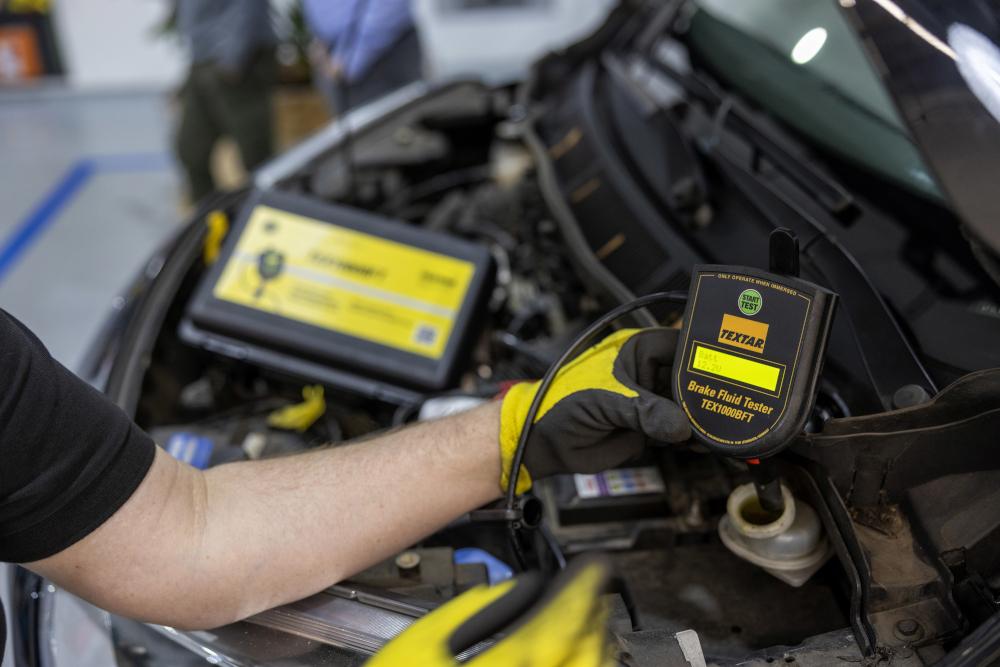
Brake fluid transfers the pressure generated by the brake pedal through the hydraulic system to the brakes. It must perform reliably under high temperatures and demanding conditions.
Many European vehicles specify brake fluid replacement around every two years, although the correct interval varies by manufacturer, model and service schedule.
Unlike brake pads, brake fluid may need replacing because of time and condition rather than visible wear.
Why Does Brake Fluid Need Changing?
Most conventional automotive brake fluids are hygroscopic, meaning they absorb moisture over time. As moisture content increases, the fluid’s boiling performance can deteriorate.
Under demanding braking conditions, excessive moisture can contribute to vapour formation and reduced hydraulic performance. Moisture can also contribute to corrosion within brake components.
What Are the Signs of Old or Contaminated Brake Fluid?
Brake fluid condition can’t reliably be judged by appearance alone. Testing, service history and manufacturer replacement intervals are more useful.
Warning signs of a braking-system problem can include a soft pedal, inconsistent pedal feel or reduced braking performance, but these symptoms may also indicate leaks, air in the system or other faults that require immediate attention.
DOT 4, DOT 5.1 and European Brake Fluid Specifications
European manufacturers may specify particular brake fluid standards, including DOT 4, DOT 4 low-viscosity formulations or other approved specifications.
The correct fluid must meet the requirements of the specific vehicle and braking system. It’s important not to assume that any bottle labelled DOT 4 is automatically suitable for every modern European car.
A professional brake fluid service should use the correct specification and appropriate bleeding procedures, including any manufacturer-required electronic processes.
European Performance Brakes: Why Heat Management Matters
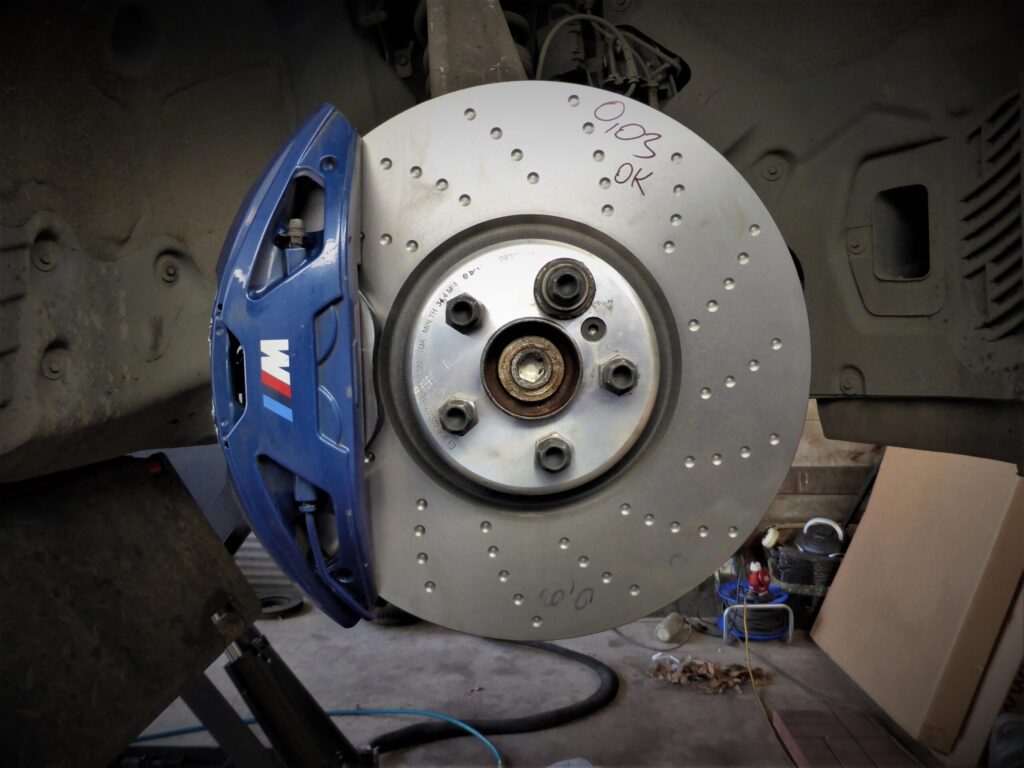
Performance-oriented European cars often feature larger brake rotors, upgraded calipers and friction materials designed to cope with higher braking demands.
These components help manage the heat generated when the vehicle slows down. However, even high-performance brakes are subject to wear and can lose effectiveness when overheated.
Brake fade can occur when excessive heat reduces braking effectiveness. Depending on the cause, this may involve friction material performance, brake fluid temperature or other system factors.
For owners of BMW M Sport models, Audi S and RS vehicles, Mercedes-AMG models or Volkswagen GTI and R variants, using suitable brake components and maintaining the system correctly is particularly important.
Not every sport-branded trim has the same braking hardware, so replacement parts should always be matched to the actual vehicle specification.
Brake Servicing Considerations by European Car Brand
BMW Brake Pads, Rotors & Wear Sensors
Many BMW vehicles use electronic brake wear monitoring and condition-based service information. Depending on the model, replacing brake pads may also involve fitting a new wear sensor and resetting the service indicator.
BMW brake components vary considerably between standard models, M Sport configurations and full M performance vehicles. Correct parts identification is essential.
Audi Brake Rotor Replacement & Electronic Parking Brakes
Audi vehicles such as the A4, A6, Q5 and Q7 may have electronic parking brakes and model-specific brake servicing requirements.
On certain vehicles, rear brake work requires the parking brake system to be placed into a service mode using suitable equipment. This helps prevent damage to the actuator and related components.
Brake rotor condition, pad wear and electronic system operation should all be considered during an Audi brake inspection.
Mercedes-Benz Brake Wear Warnings & Fluid Servicing
Mercedes-Benz vehicles may use brake wear sensors, electronic parking brake systems and model-specific hydraulic servicing procedures.
If your C-Class, E-Class, GLC or GLE displays a brake warning, the cause should be confirmed rather than assuming it is simply time for new pads.
Some models also have specialised brake system procedures that must be followed during maintenance.
Volkswagen Golf, Tiguan & Performance Brake Maintenance
Volkswagen models such as the Golf, Tiguan and Passat use different brake systems depending on engine, generation and equipment.
Performance variants such as the Golf GTI and Golf R may have larger or different braking components from standard models. Brake pads and rotors should be selected to suit the vehicle’s fitted system.
Land Rover & Volvo SUV Brake Servicing
Larger SUVs such as the Land Rover Discovery, Range Rover, Volvo XC60 and Volvo XC90 can place significant demands on brake components because of their weight and intended use.
Routine brake inspections help identify pad wear, rotor condition, caliper problems and fluid servicing requirements before they become more serious.
How Much Do European Brake Repairs Cost?
European brake repair costs depend on the vehicle, the brake system fitted and the components requiring replacement.
A routine brake fluid flush is a different job from replacing large performance rotors, multi-piston calipers or electronic parking brake components.
| Brake Service or Repair | Main Cost Factors | What to Know |
|---|---|---|
| Brake pad replacement | Pad type, axle, labour and wear sensors | May be straightforward if rotors and other components are serviceable |
| Brake pad and rotor replacement | Rotor size, construction, parts and labour | Performance brake systems can be more expensive |
| Brake wear sensor replacement | Sensor design, wiring and service reset requirements | Often completed alongside brake pad replacement |
| Brake fluid flush | Fluid specification and bleeding procedure | Usually a scheduled maintenance service |
| Caliper repair or replacement | Caliper type, parts and hydraulic work | May be necessary for sticking, leaking or damaged components |
| Electronic parking brake repair | Actuator, wiring, diagnostics and calibration | Requires the correct vehicle-specific procedures |
| ABS or stability control diagnosis | Fault complexity, testing and affected components | Diagnosis should establish the cause before parts are replaced |
For an accurate quote, provide your vehicle’s make, model, year and details of any brake warnings or symptoms. A workshop can then inspect the system and explain which components need attention.
What Happens During a Professional European Brake Inspection?
A thorough brake inspection should consider more than just the remaining brake pad material.
- Discuss the symptoms: Identify noises, vibration, warning lights or changes in braking feel.
- Inspect brake pads: Measure remaining friction material and check for uneven wear.
- Measure brake rotors: Compare rotor thickness and condition with manufacturer specifications.
- Check calipers and hardware: Inspect for sticking, leaks, damaged components or abnormal movement.
- Assess hydraulic condition: Check relevant fluid condition, leaks and servicing requirements.
- Investigate electronic warnings: Test wear sensors, ABS or parking brake systems where appropriate.
- Explain the findings: Provide a clear recommendation and quote for necessary work.
This helps avoid replacing components unnecessarily while ensuring safety-critical faults are addressed.
How to Make European Brake Pads and Rotors Last Longer
Brake components are designed to wear, but driving habits and regular maintenance can influence how long they last.
- Leave enough following distance to avoid unnecessary hard braking.
- Have brake pads and rotors inspected during routine servicing.
- Investigate squealing, vibration or unusual brake noises promptly.
- Replace worn pads before they damage rotor surfaces.
- Have sticking calipers or uneven pad wear checked.
- Follow the correct brake fluid replacement schedule.
- Use suitable replacement components for your vehicle’s braking system.
For high-performance European vehicles, brake maintenance should also account for how the car is used. Frequent heavy braking and track use can create very different demands from everyday commuting.
The Biggest Brake Maintenance Mistakes to Avoid
- Replacing pads without checking rotors: Disc thickness and condition must also be assessed.
- Ignoring a brake wear sensor warning: Remaining pad material may be limited.
- Assuming vibration always means warped rotors: Proper measurement is needed to identify the cause.
- Skipping brake fluid changes: Fluid condition can deteriorate even when the vehicle is driven infrequently.
- Using incorrect brake fluid: European vehicles may require specific approved formulations.
- Overlooking electronic parking brake procedures: Incorrect servicing can damage components on certain models.
- Continuing to drive with grinding or reduced braking: This can increase repair costs and create a serious safety risk.
Frequently Asked Questions About European Brake Servicing
How often should European brake rotors be replaced?
There is no single kilometre interval for every European car. Brake rotors should be replaced when they reach minimum thickness or develop damage or defects that make them unsuitable for continued use. Their condition should be checked during routine servicing and brake pad replacement.
Do I need new brake rotors every time I replace the pads?
Not always. If the rotors are within specification and in suitable condition, they may be reusable. A technician should measure and inspect them before deciding whether replacement is necessary.
What does a BMW brake pad warning mean?
A BMW brake pad warning may indicate that the wear sensor has been triggered or that the monitoring system has identified a servicing requirement. The brakes should be inspected to confirm remaining pad thickness and sensor condition.
Do Mercedes-Benz and Audi brake sensors need replacing?
Activated or damaged brake wear sensors generally need replacing. Whether an untriggered sensor can be reused depends on the vehicle and manufacturer’s servicing procedure.
How often should brake fluid be changed in a European car?
Many European vehicles specify brake fluid replacement around every two years, but the correct interval depends on the manufacturer, model and service schedule. Follow the requirements for your particular vehicle.
Why does my steering wheel shake when braking?
Brake disc thickness variation or runout can contribute to steering wheel vibration during braking. Wheel, hub, suspension and other issues can produce similar symptoms, so proper inspection is needed.
Are European performance brakes more expensive to replace?
They can be. Larger rotors, specialised friction materials and multi-piston calipers may cost more than conventional braking components. The actual price depends on the vehicle and brake package fitted.
Can an independent mechanic service European brakes?
Yes. A suitably equipped independent workshop can carry out European brake inspections, pad and rotor replacement, brake fluid servicing and many electronic brake repairs, provided the correct manufacturer procedures and equipment are used.
European Brake Repairs & Servicing | Windsor & Grange, Brisbane
Whether your European car has started squealing, the steering wheel vibrates under braking or a brake wear warning has appeared on the dashboard, getting the system inspected early can help protect braking performance and avoid unnecessary repairs.
At Memmotts Automotive, we provide brake inspections, brake pad and rotor replacement, brake fluid flushes, caliper repairs, wear sensor replacement and electronic brake diagnostics for BMW, Audi, Mercedes-Benz, Volkswagen, Land Rover, Volvo and other makes.
Why Choose Memmotts Automotive?
Family-owned since 1956, Memmotts Automotive combines experienced technicians, professional diagnostic equipment and straightforward advice. We inspect the condition of your braking system, explain what needs attention and provide clear quotes before repairs proceed.
With workshops in Windsor and Grange, we assist European vehicle owners across Brisbane’s northside, including Lutwyche, Wilston, Stafford, Albion, Newmarket, Gordon Park and surrounding suburbs.
Need European brake repairs or a brake inspection in Brisbane? Contact Memmotts Automotive to discuss your vehicle’s symptoms or book a brake check at the workshop that suits you.
Book online now, in under a minute!
Prefer to book by phone? Windsor (07) 3357 4955 · Grange (07) 3172 5490 — Mon–Fri 8:00am–5:00pm.